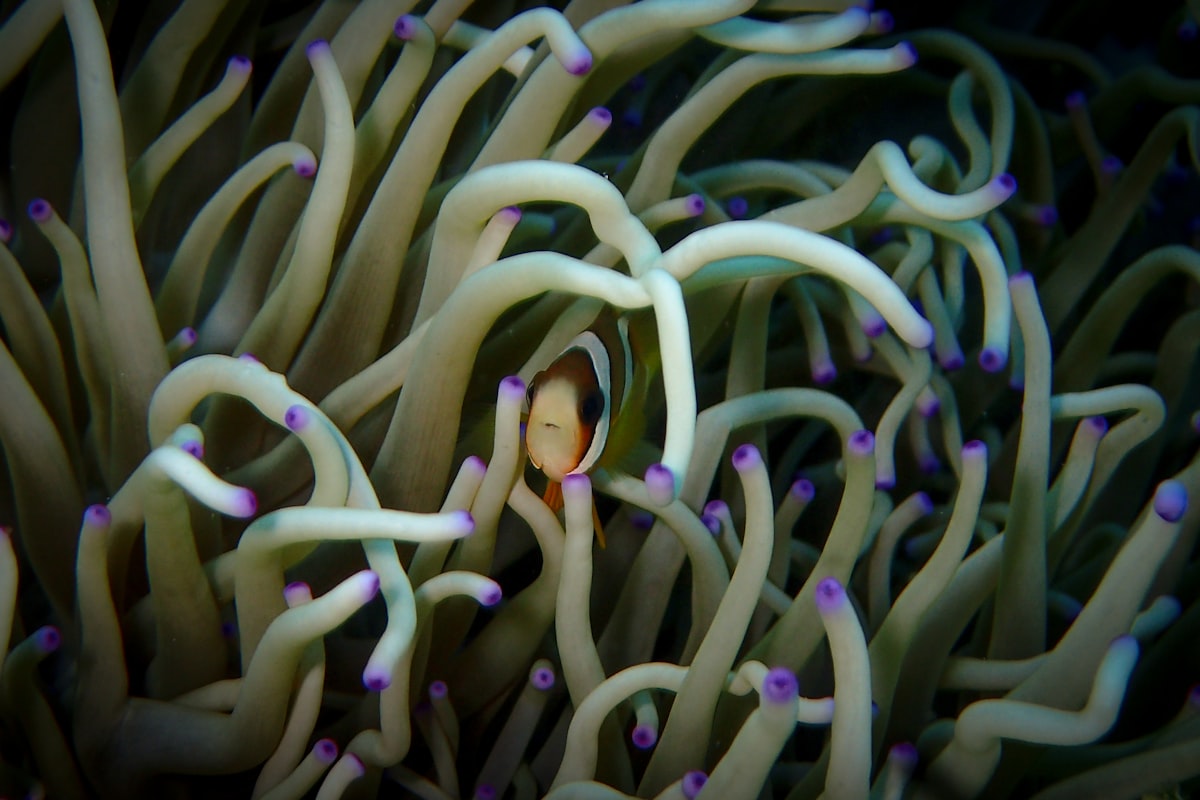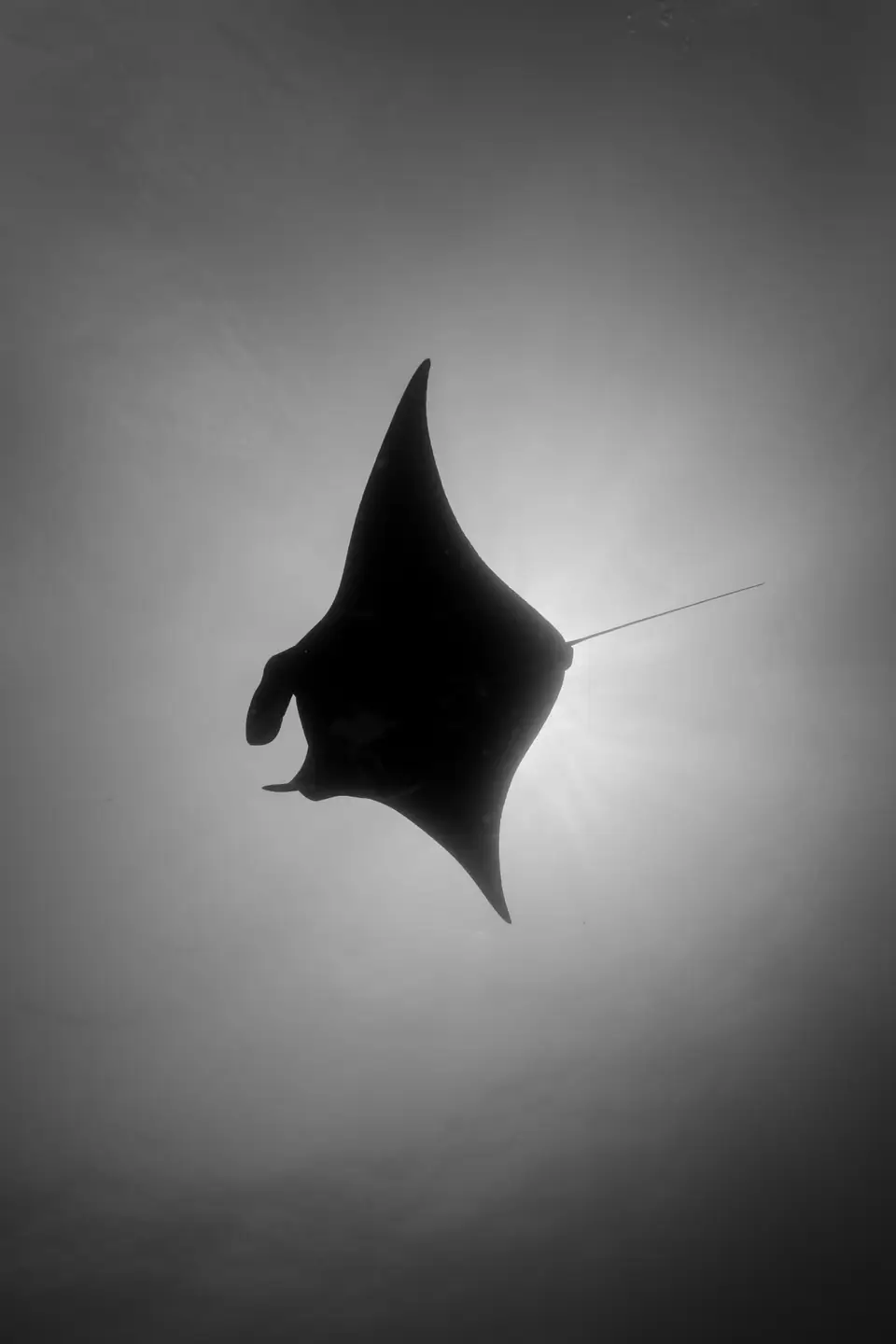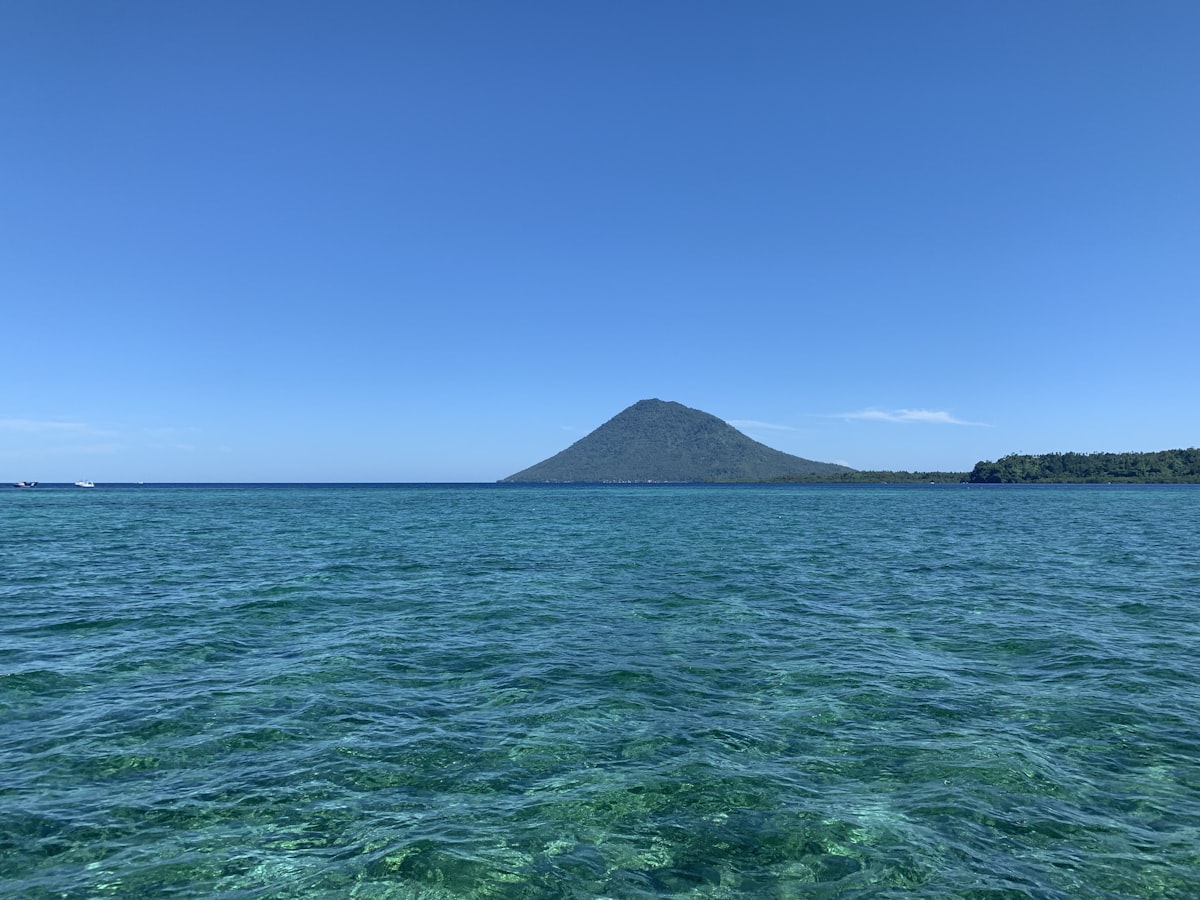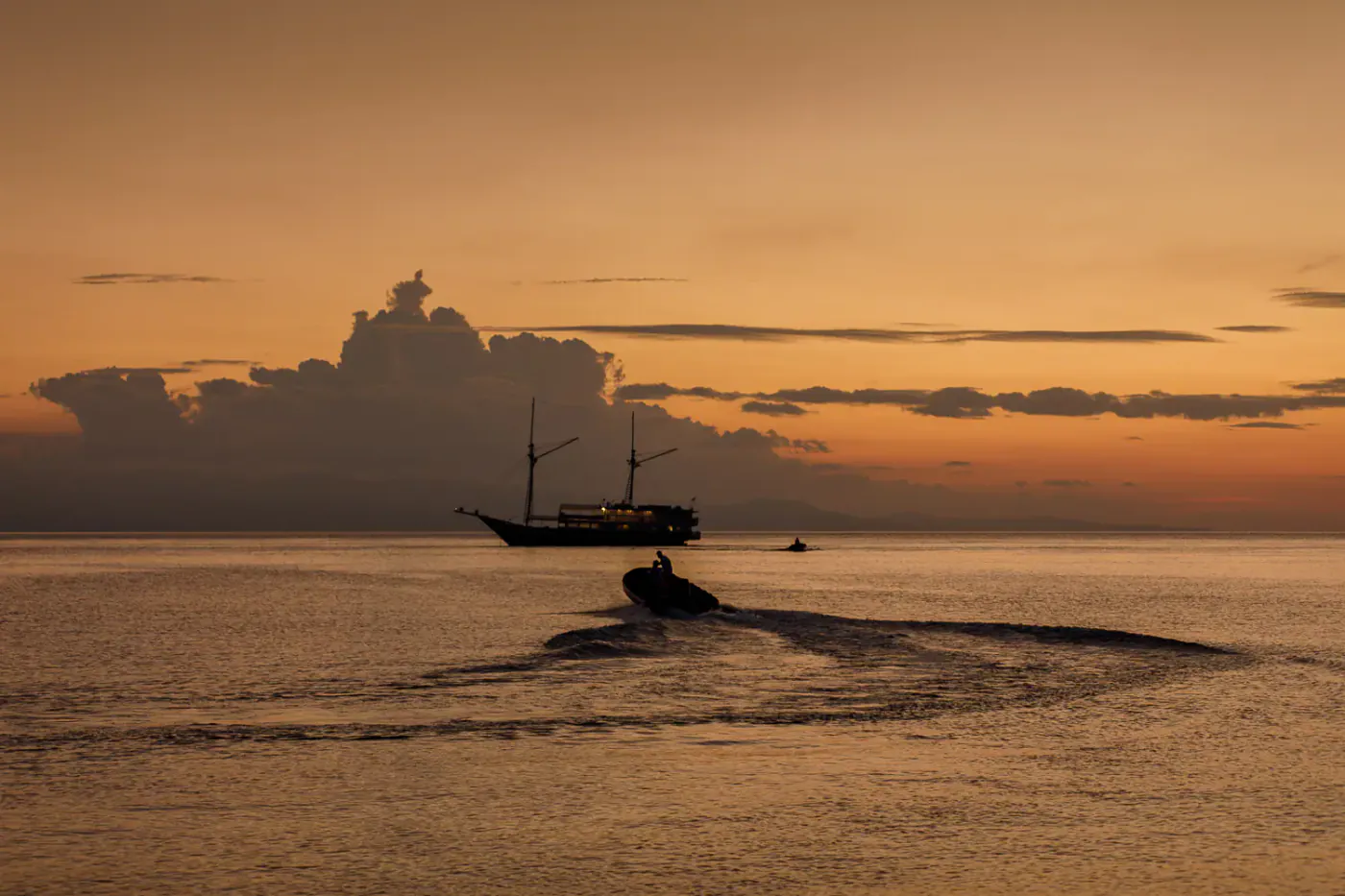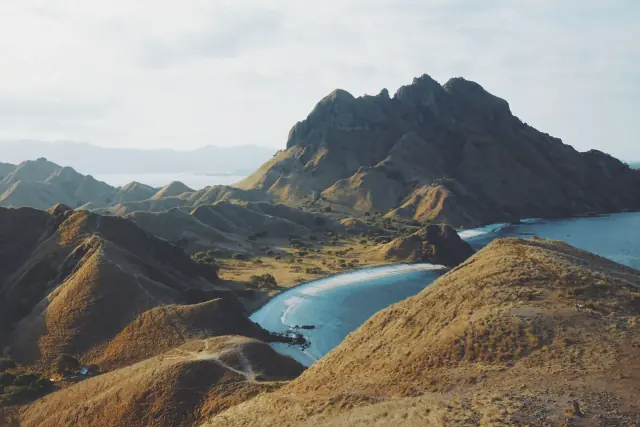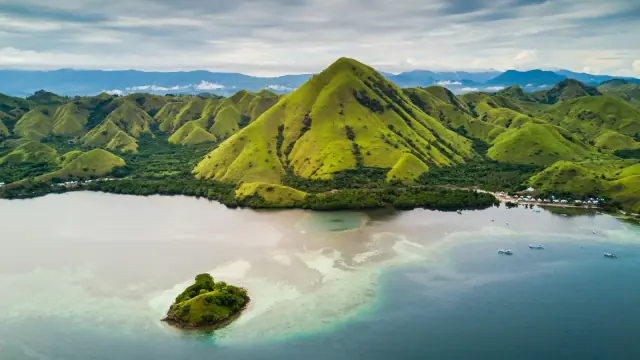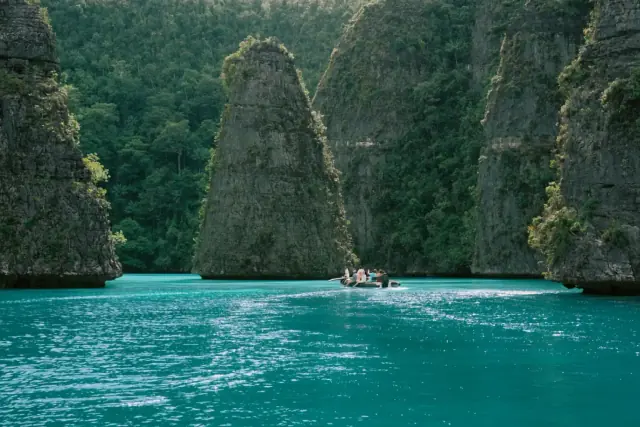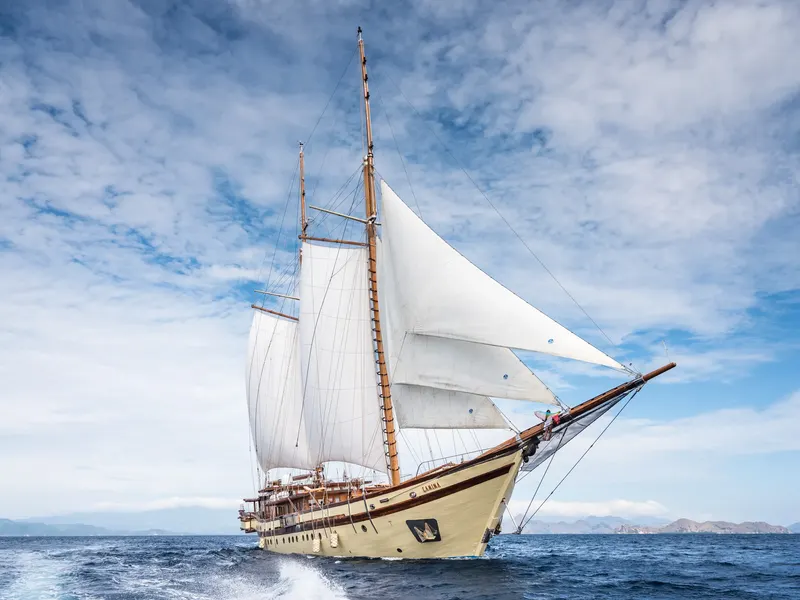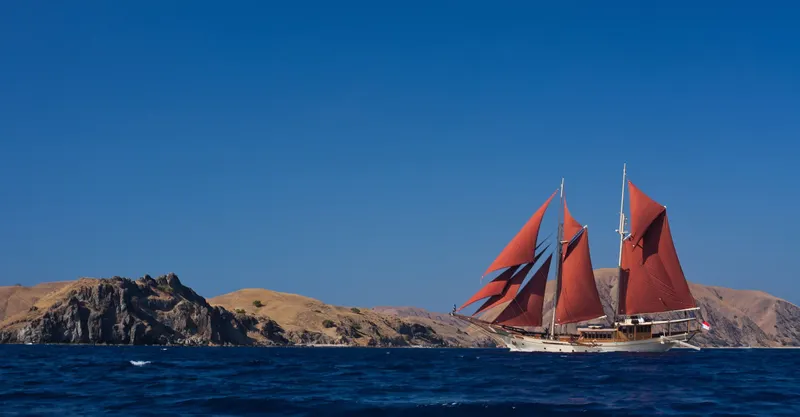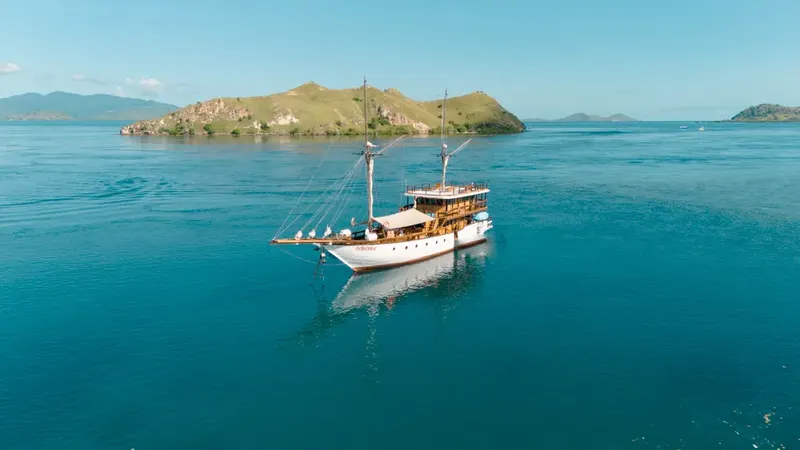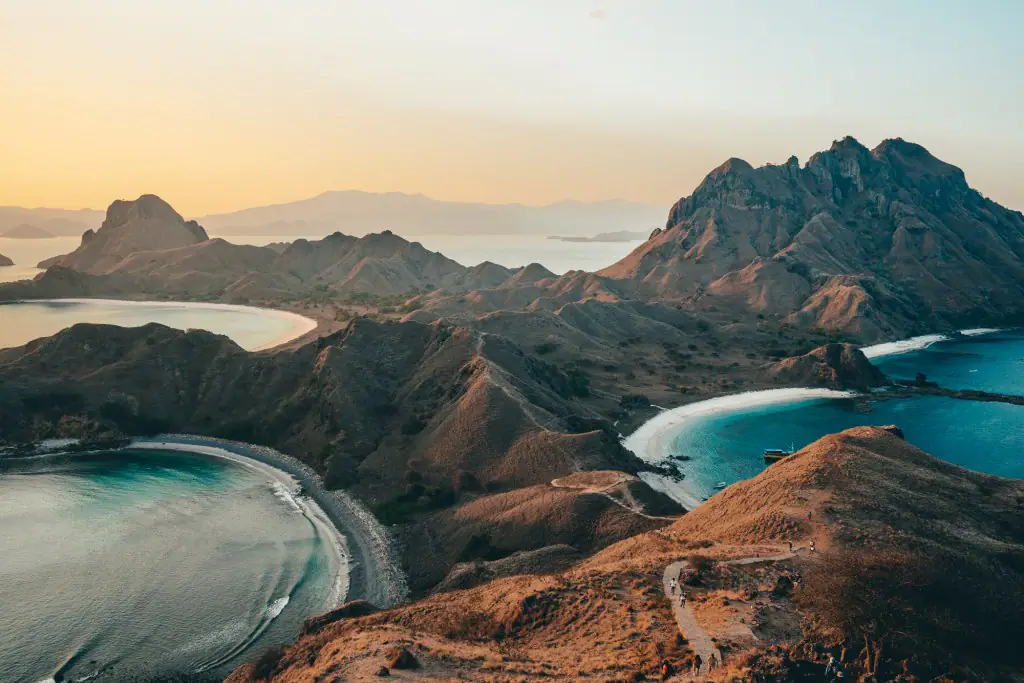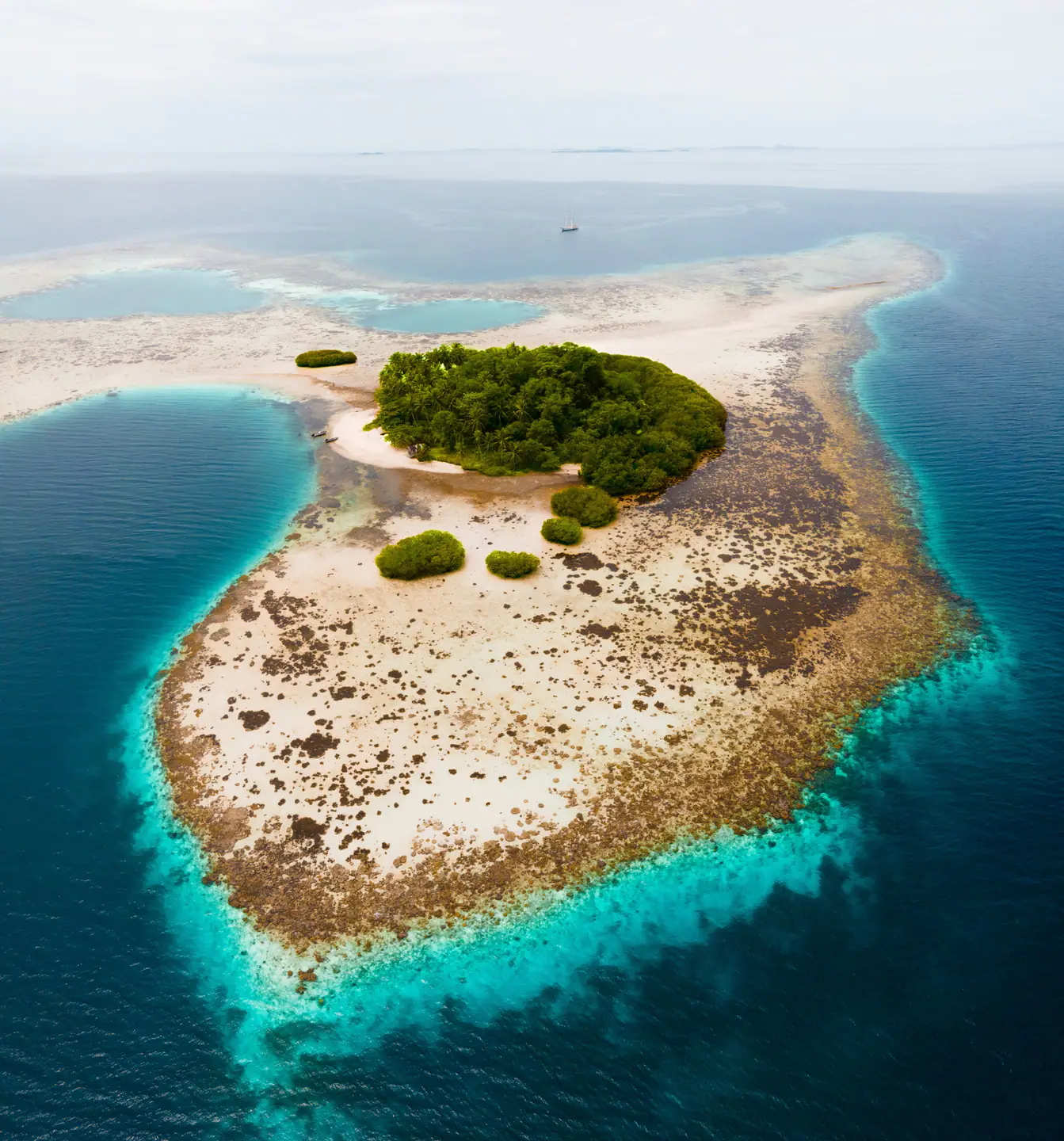
If Raja Ampat is Indonesia's marine crown, Triton Bay is its hidden jewel. Tucked into the south coast of West Papua, inside the Kaimana Marine Protected Area and the wider Bird's Head Seascape, it offers diving that feels fundamentally different from anywhere else in the country. There are no resorts on the main reefs, very little infrastructure and, on most days, no other boats. A private yacht is by far the most comfortable way to explore it.
Where is Triton Bay and why is it special?
Triton Bay lies near the town of Kaimana on the southern coast of West Papua, a few hundred kilometres southeast of Misool. It is special because of extraordinary soft coral growth, species found almost nowhere else and some of the most reliable whale shark encounters in Indonesia, all with virtually no crowds.
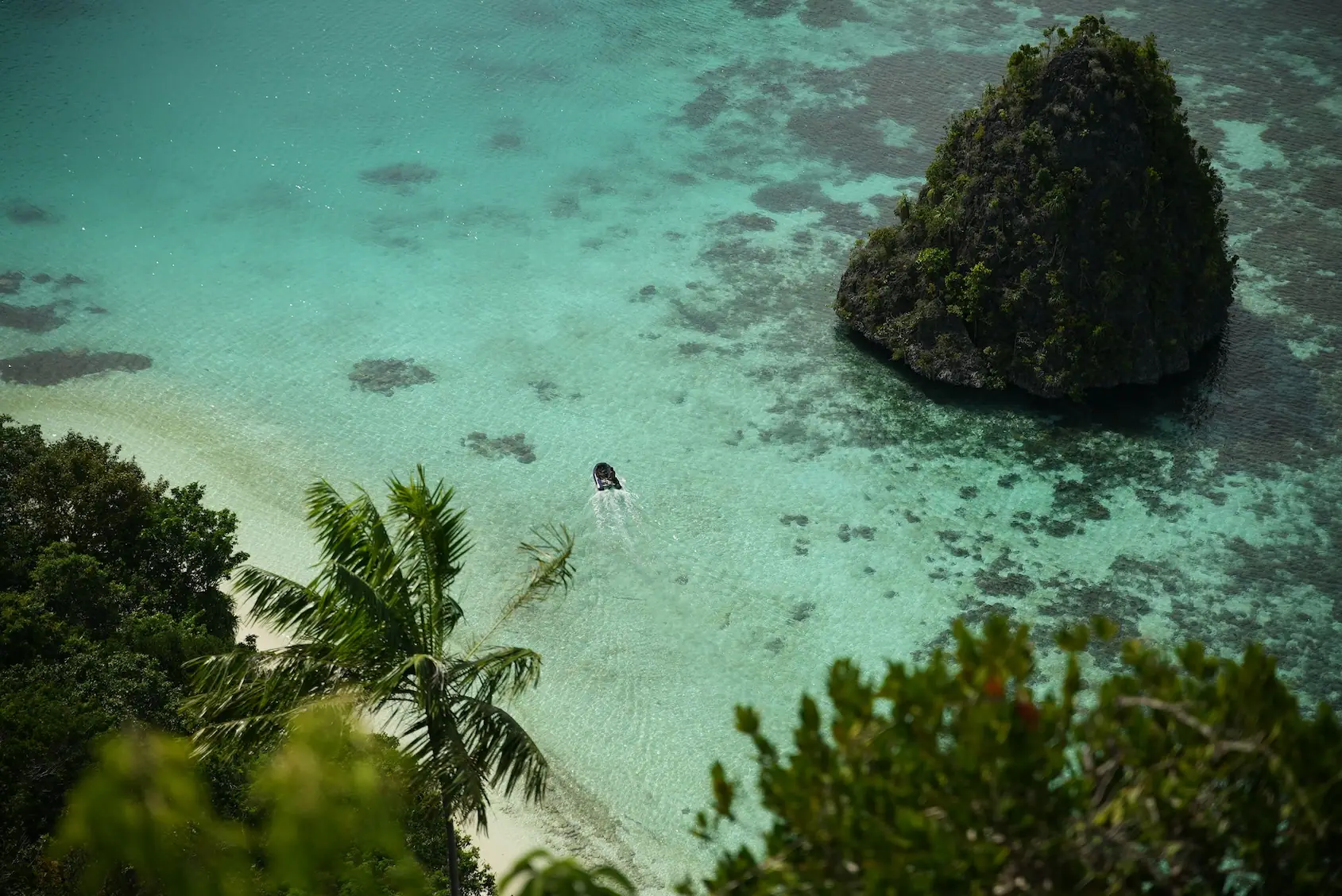
- Soft coral gardens: nutrient rich water feeds walls and pinnacles draped in soft corals and sea fans in every colour.
- Remarkable biodiversity: more than 1,000 reef fish species have been recorded in the area since the first scientific surveys in 2006.
- Endemic species: look for the Triton Bay walking shark, a species of epaulette shark, and the Triton Bay flasher wrasse.
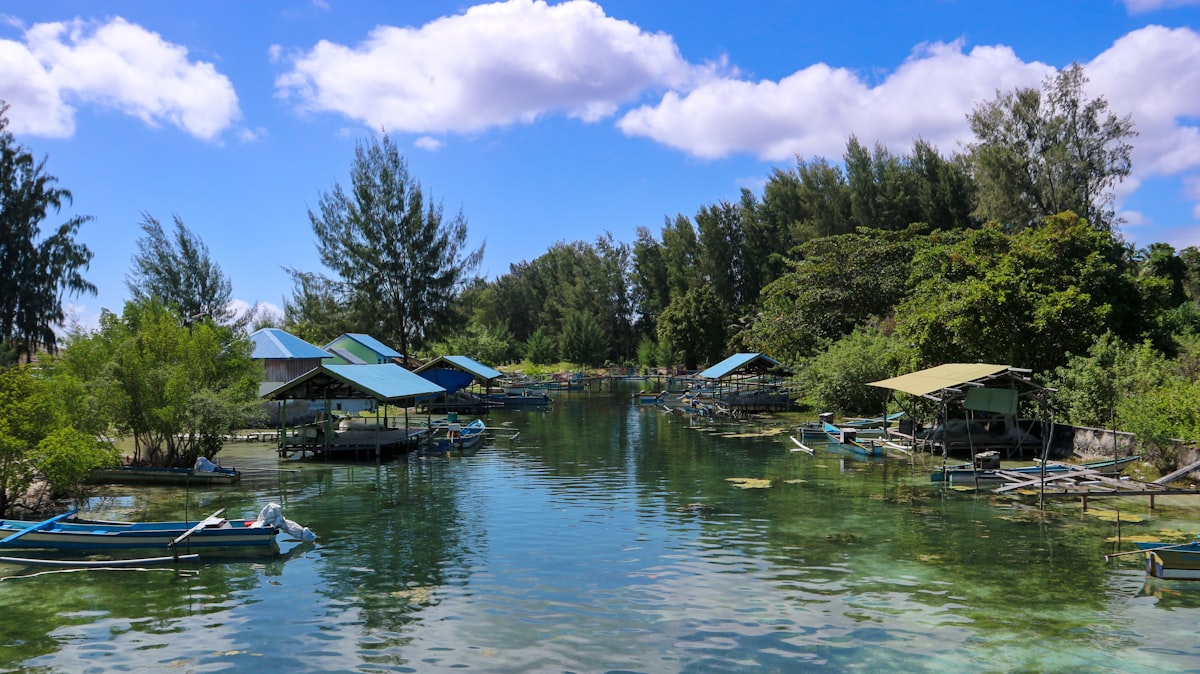
- Whale sharks: they regularly visit bagans, the traditional lift net fishing platforms, to feed on small fish.
- Solitude: it is rare to share a dive site with another vessel.
- Culture: Papuan villages, ancient rock paintings on limestone cliffs and lush jungle shores.
What is diving in Triton Bay like?
Expect colourful soft coral walls, rich macro life and moderate to sometimes strong currents, in water that is often green rather than blue. That green tint comes from plankton, which is exactly what feeds the reef's density of life.
- Water temperature: typically around 27 to 30 C in the main season.
- Visibility: often 10 to 20 m, lower than Raja Ampat's best days but more than offset by colour and life.
- Depths: from shallow reef tops around 5 m to walls beyond 40 m.
- Currents: mild in sheltered bays, stronger around points and straits. Guides time dives to the tides.
- Experience level: best for divers with Advanced Open Water certification and a good number of logged dives, though many sites suit confident Open Water divers.
Dive sites and experiences our guests rate highly
- Bagan whale shark encounters: snorkel or dive beside whale sharks feeding near the fishing platforms. Wonderful for divers and snorkelers alike.
- Little Komodo: a classic soft coral and schooling fish site with dense colour from the shallows to depth.
- Disneyland: named for its almost cartoonish explosion of soft corals and sea fans.
- Flasher Beach: famous for displaying flasher wrasse and excellent macro photography.
- Iris Strait: a scenic channel with soft coral covered walls, best on the right tide.
- Night dives: walking sharks, crustaceans and nudibranchs come out after dark.
Your dive guide chooses sites each day based on currents and conditions, so the exact list varies by trip.
A typical dive day on board
- Early morning: coffee, a briefing and the first dive at around 7 am, when light and life are at their best.
- Late morning: breakfast, a rest on deck, then a second dive on the next tide.
- Afternoon: lunch while the yacht repositions, followed by a third dive or a snorkel at a bagan if whale sharks have been reported.
- Evening: an optional night dive for walking sharks, then dinner on deck under the stars.
Are the Triton Bay whale shark encounters ethical?
They are among the more natural encounters available, because the bagans are working fishing platforms, not tourist attractions. Whale sharks come to feed on small fish around the nets and the fishermen's scraps. Encounters are frequent but never guaranteed. We follow respectful guidelines: no touching, keep a few metres away, no flash photography and limited numbers in the water at once.
When is the best time to dive Triton Bay?
The best time is October to April, when the southeast monsoon has passed and seas are calmer. From around June to September, strong winds and rough seas make the region hard to reach and diving less comfortable, so most yachts avoid it.
- October to December: excellent conditions and an ideal window to combine with Raja Ampat as yachts move into the region.
- January to April: good diving and an easy pairing with Misool. Occasional rain showers are normal.
- May: shoulder month with changing conditions.
- June to September: generally not recommended because of the southeast monsoon.
This timing fits neatly with Raja Ampat's best season from October to April, which is why most Triton Bay charters are linked to a Raja Ampat or Misool route.
How do you get to Triton Bay by yacht?
You either fly to Kaimana (KNG) and board there, or sail in from Raja Ampat, Misool or the Banda Sea as part of a longer expedition. Kaimana is reached on connecting domestic flights, typically via Sorong or Ambon, and the main dive area around Aiduma Island is roughly 30 km from town.
Route options compared
- Kaimana return (6 to 8 nights): fly in, dive Triton Bay intensively, fly out. The most time efficient option.
- Sorong to Kaimana via Misool (10 to 14 nights): start in Raja Ampat, cruise south through Misool, then cross to Triton Bay. Our favourite combination for keen divers.
- Ambon to Kaimana via the Banda Sea (12 to 14 nights): spice islands history, Banda's volcano and walls, then Triton Bay's soft corals.
- Grand expedition (14+ nights): Banda Sea, Triton Bay and Raja Ampat in one voyage, ideal for repeat Indonesia travellers.
For embarkation logistics on the Raja Ampat side, see our Sorong embarkation guide. Our 12 day Ambon to Sorong itinerary shows how a Banda and Misool route flows.
How much does a Triton Bay yacht charter cost?
Private charters start from US$1,900 per night for the whole yacht, and Triton Bay trips are usually 10 to 14 nights. Because the bay is remote, a one way relocation fee often applies if the yacht starts or ends away from its normal base.
- Classic phinisi: US$1,900 to 4,500 per night, roughly US$19,000 to 63,000 for 10 to 14 nights.
- Premium phinisi: US$4,500 to 9,000 per night, roughly US$45,000 to 126,000 for 10 to 14 nights.
- Superyacht: from US$9,000 per night, with the top of the fleet at US$20,000 to 39,000 per night.
Rates usually include the crew, all meals, soft drinks, fuel for the agreed itinerary, snorkel gear and kayaks. Scuba diving on some yachts, marine park and conservation fees, alcohol, domestic flights, relocation fees and crew gratuity, typically 10 percent of the charter fee, are usually extra. The cost per person becomes very reasonable for a group of six to ten divers.
Who is Triton Bay best for?
Triton Bay suits travellers who value rarity and marine life over convenience.
- Experienced divers looking for genuine frontier diving
- Underwater photographers, for both macro and wide angle soft coral scenes
- Travellers who have already explored Komodo and Raja Ampat
- Snorkelers and divers who want a strong chance of swimming with whale sharks
- Groups who want a long, remote expedition with no crowds
Practical tips for a Triton Bay expedition
- Choose a yacht with a full dive setup: compressor, nitrox if possible, experienced guides and a stable tender.
- Bring cash. Kaimana has very limited facilities, and there are no ATMs on the reefs.
- Carry dive insurance with medical evacuation cover, as the nearest major hospital is far away.
- Pack a 3 mm wetsuit, reef safe sunscreen and macro and wide angle lenses if you shoot.
- Expect limited or no internet for days at a time.
- Book 9 to 12 months ahead. Only a handful of yachts schedule Triton Bay each season.
Interested in other remote dive regions? Read about Cenderawasih Bay's whale sharks, or explore our Triton Bay yacht charter page. When you are ready, browse our 50+ private yachts or contact our team to check which yachts are scheduling Triton Bay this season.